
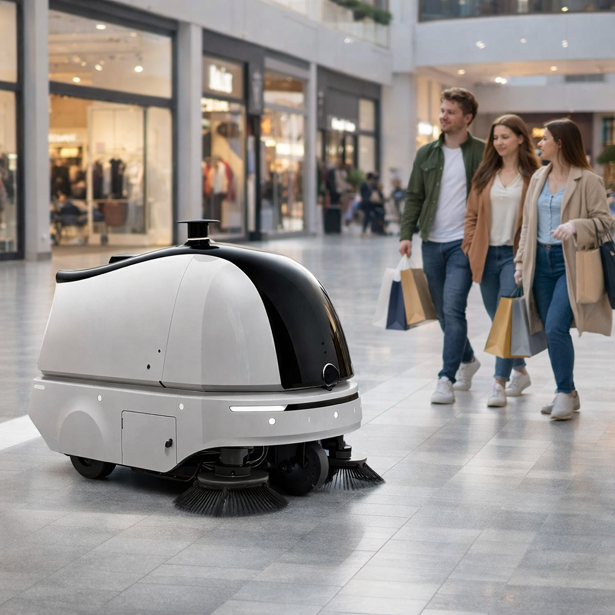
Industry background & pain point
Across the United States, commercial facilities are under growing pressure to maintain higher cleanliness standards with fewer available resources. Hotels, shopping malls, office buildings, airports, and healthcare facilities all face the same structural challenge: cleaning demand is rising while reliable labor is becoming harder to secure.
The issue is particularly acute during night shifts. Night cleaning is essential to avoid disrupting guests, employees, or customers, yet it is consistently the hardest shift to staff. High turnover, absenteeism, rising wages, and safety concerns make overnight cleaning operations unstable and costly.
For facility managers and hotel operators, the question is no longer whether night cleaning is difficult—but how to ensure consistent results without increasing operational risk or labor dependency.
This is where commercial cleaning robots are increasingly being adopted as part of modern facility management strategies.
Why traditional solutions fail
Historically, facilities have relied on three main approaches to night cleaning:
-
Full manual cleaning teams
-
Outsourced cleaning contractors
-
Reduced cleaning scope during night hours
Each approach now shows clear limitations.
Manual night crews are difficult to retain. Labor shortages in the U.S. cleaning sector mean that facilities often operate understaffed, leading to inconsistent coverage and missed areas. Overtime costs and last-minute staffing gaps further erode operational efficiency.
Outsourcing does not eliminate the problem—it simply transfers it. Contractors face the same labor shortages and often rotate staff frequently, reducing accountability and consistency.
Reducing night cleaning scope may lower short-term costs, but it increases long-term risks: poor hygiene standards, faster floor wear, guest complaints, and higher corrective cleaning expenses during the day.
In short, traditional labor-dependent models struggle to deliver predictable outcomes at scale, especially during overnight operations.
How robots are deployed in this scenario
Modern autonomous cleaning robots are designed specifically to operate in large commercial environments during low-traffic hours.
Typical deployment follows a structured process:
-
Mapping and setup: The robot maps the facility layout, including corridors, open areas, and restricted zones.
-
Scheduled night operation: Robots are programmed to operate autonomously during predefined night hours.
-
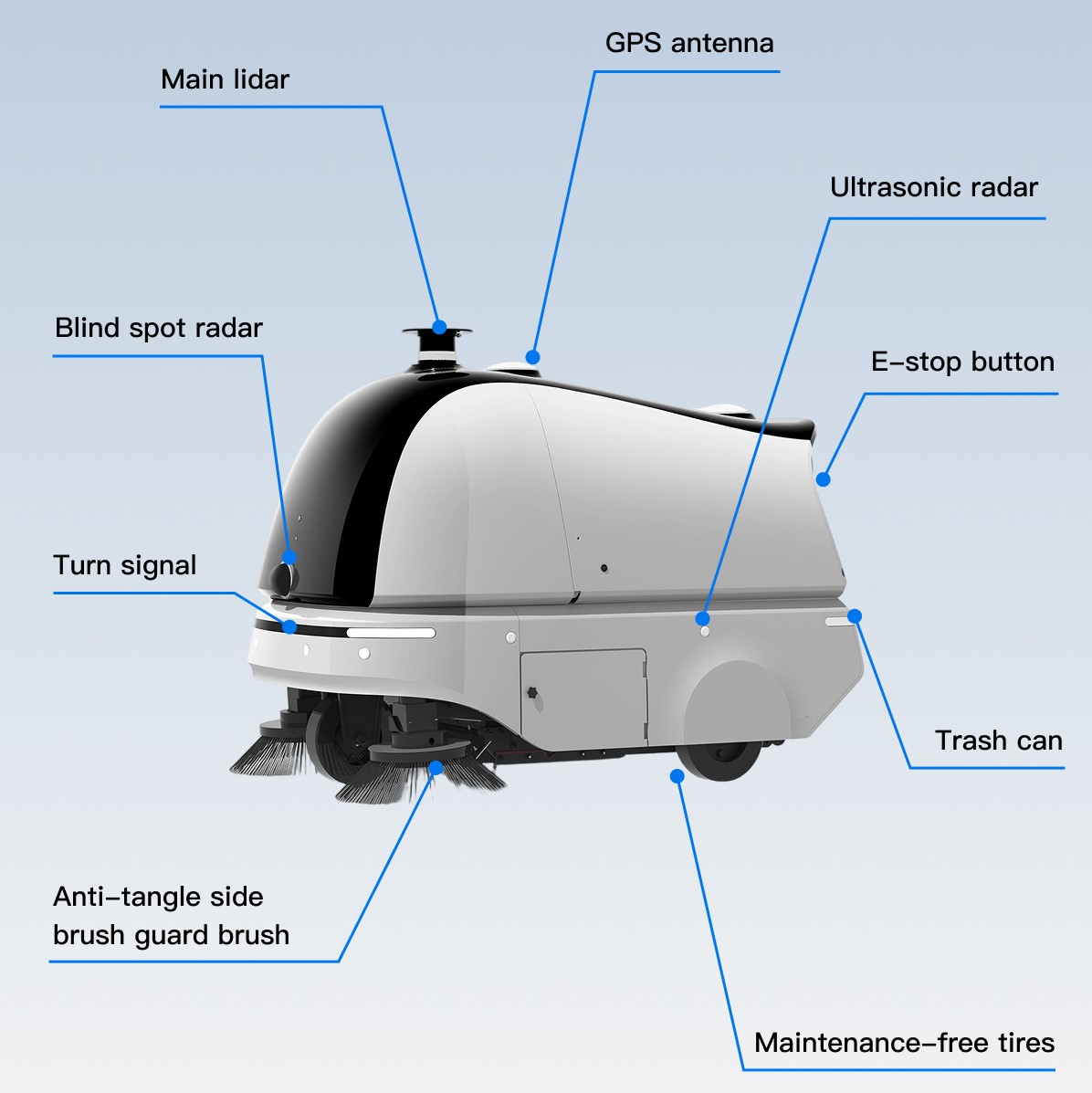
Autonomous navigation: Using sensors and AI navigation, the robot avoids obstacles, adapts to layout changes, and operates safely without supervision.
-
Automated floor scrubbing: Robotic floor scrubbers handle repetitive, labor-intensive tasks such as floor washing, scrubbing, and drying.
-
Data reporting: Cleaning routes, coverage, and operating time are logged for facility management review.
Rather than replacing all cleaning staff, robots are typically used to automate large-area, repetitive tasks, allowing human staff to focus on detail work, sanitation touchpoints, and quality checks.
Key operational benefits
Facilities adopting cleaning robots for night operations report several measurable advantages.
1. Labor risk reduction
By automating night cleaning, facilities reduce reliance on hard-to-staff overnight shifts. This directly addresses the labor shortage in cleaning operations, improving schedule stability and reducing last-minute disruptions.
2. Consistent cleaning quality
Robots follow predefined routes and standards every night. This consistency is difficult to achieve with rotating manual teams and leads to more predictable cleanliness outcomes.
3. Cost control and ROI visibility
While robots require upfront investment, they significantly reduce recurring labor costs over time. Many U.S. facilities see a clear payback period once night shift labor is partially automated.
4. Improved floor longevity
Robotic floor scrubbers apply consistent pressure, water usage, and cleaning patterns, helping preserve floor materials and reduce long-term maintenance costs.
5. Facility management automation
Robots generate operational data that supports facility management automation, enabling managers to track coverage, efficiency, and cleaning frequency with greater transparency.
Real-world considerations for U.S. facilities
While the benefits are compelling, successful deployment requires realistic planning.
First, facility size and layout matter. Cleaning robots deliver the strongest ROI in medium-to-large commercial spaces with repetitive floor areas, such as hotel corridors, lobbies, convention centers, and retail malls.
Second, robots work best as part of a hybrid cleaning model. Human staff remain essential for restrooms, detailed sanitation, and exception handling.
Third, decision-makers should evaluate local compliance and safety requirements, especially in hospitality and healthcare environments.
Finally, training and change management are important. Staff acceptance improves when robots are positioned as productivity tools rather than replacements.
Conclusion & decision guidance
For U.S. commercial facilities facing persistent labor shortages and rising operating costs, night cleaning automation is no longer experimental—it is becoming a practical operational strategy.
Autonomous cleaning robots offer a way to stabilize night operations, improve consistency, and support long-term cost control without sacrificing cleaning standards. For hotels in particular, deploying a cleaning robot for hotels during overnight hours can enhance guest experience while reducing operational strain.
Decision-makers considering this technology should start with pilot deployments in high-impact areas, evaluate ROI over time, and integrate robots into a broader facility management automation plan.
As the cleaning industry continues to evolve, facilities that embrace automation early will be better positioned to maintain standards, control costs, and operate with confidence in an increasingly constrained labor market.
Business owners — looking to deploy AI-powered robots in your operations?
Xyser Robotics designs and manufactures service robots built for real-world deployment.
Contact us to explore solutions or speak with our team.


