Introduction
One of the most common questions restaurants ask before adopting a food delivery robot is simple:
Can it transport food and drinks without spilling them?
Unlike a warehouse robot, a restaurant robot operates in crowded dining areas filled with moving customers, narrow aisles, chairs, and unexpected obstacles. Throughout the delivery process, the robot must not only reach the destination but also keep dishes stable and presentable.
This is why tray stability and operational safety are fundamental parts of food delivery robot design.
The Challenge: Restaurants Are Dynamic Environments
Restaurant conditions change constantly throughout the day.
Customers walk between tables, staff move quickly during service periods, and chairs are frequently repositioned. During peak hours, pathways that appear clear one moment may become crowded the next.
A food delivery robot must navigate through these changing conditions while carrying multiple dishes, beverages, or desserts.
Maintaining stable transportation in this environment requires more than simply moving from one location to another. It depends on how the robot navigates, turns, stops, and reacts to surrounding obstacles.
Smooth Navigation Helps Protect Food
Stable food delivery begins with navigation.
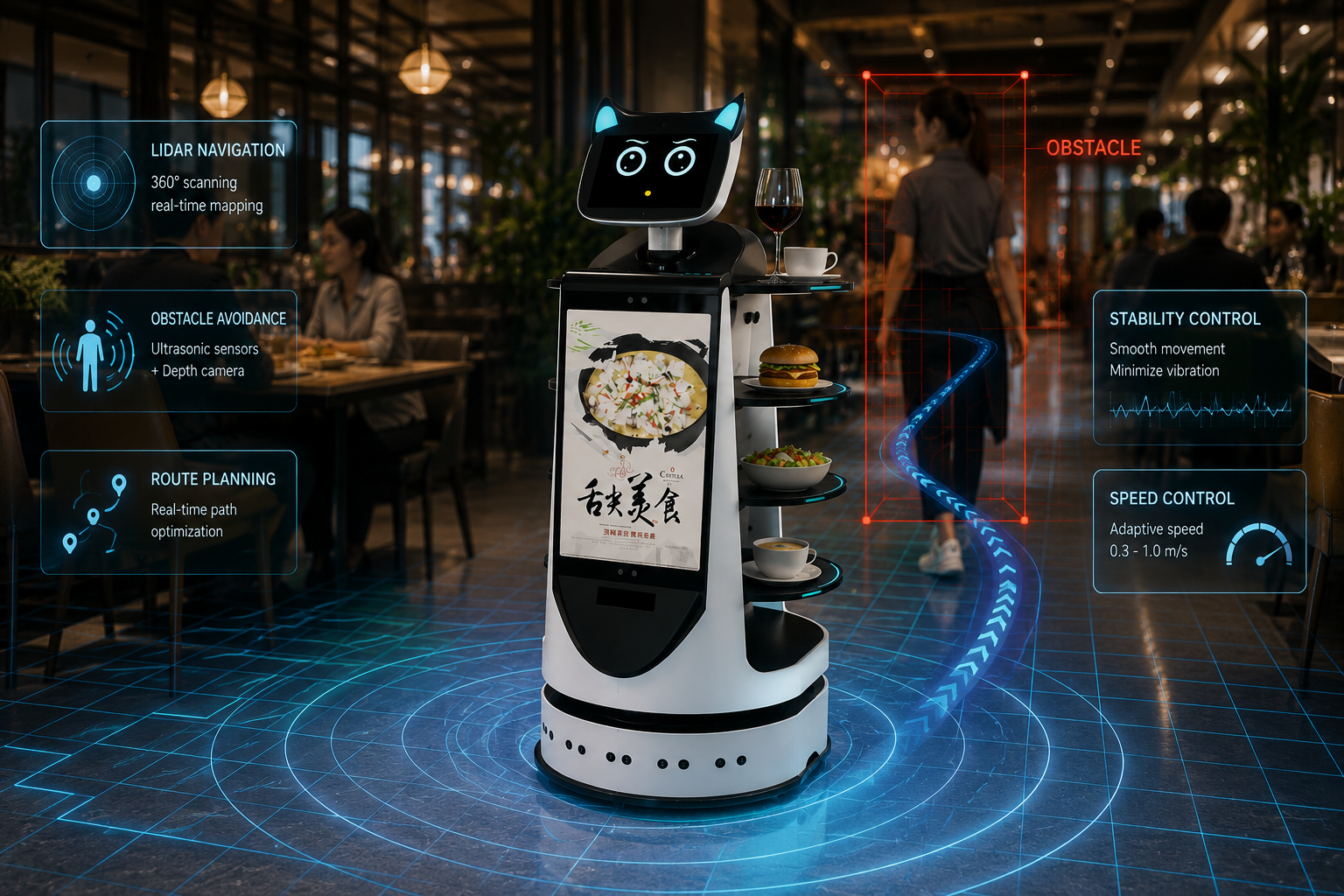
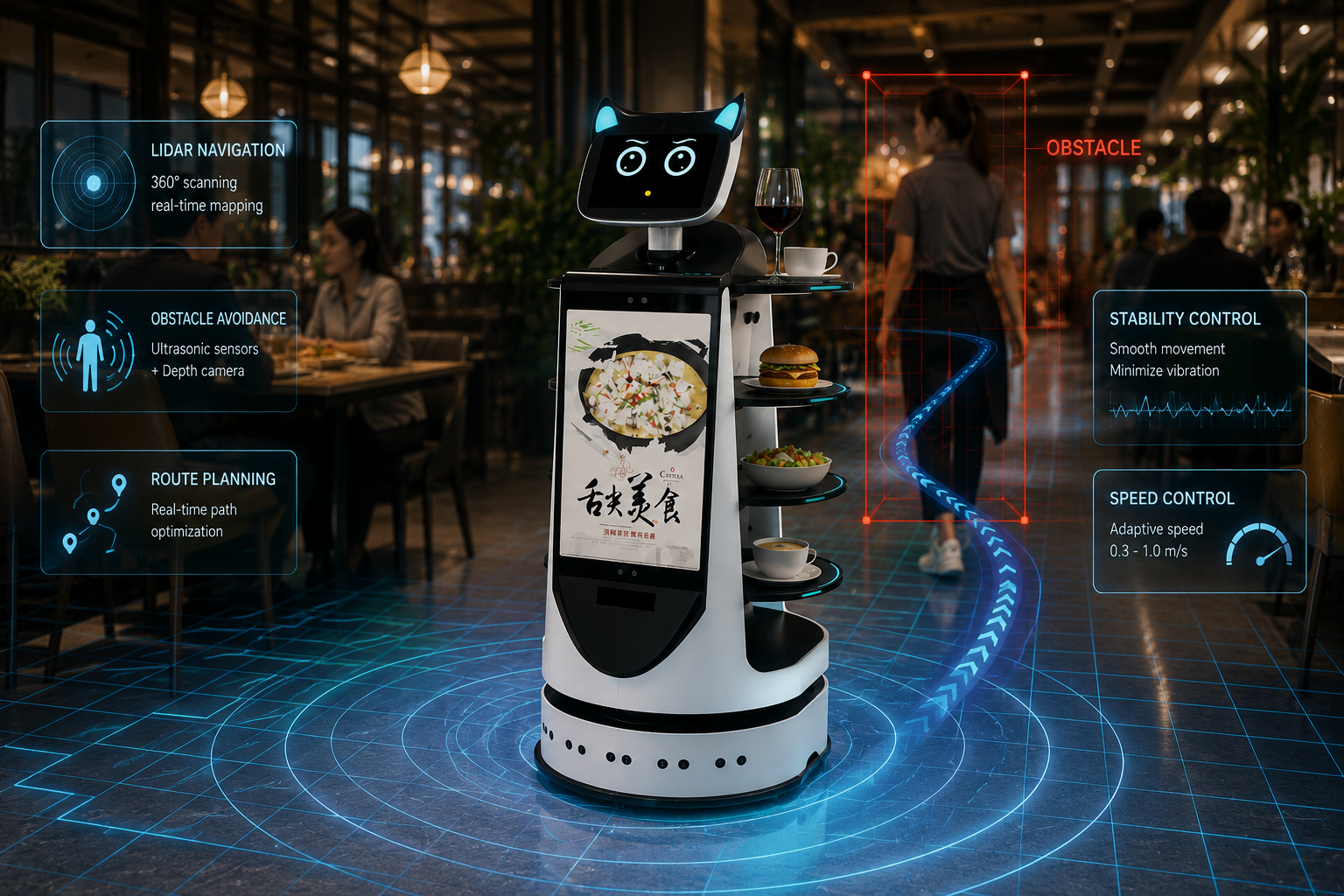
Popbot D2 uses a LiDAR navigation system to continuously identify its surroundings and calculate efficient travel paths. Instead of moving along a fixed route, the robot adjusts its path according to real-time environmental conditions.
When customers enter its path or temporary obstacles appear, the robot can automatically reroute itself without sudden movements.
This helps maintain smooth travel throughout the restaurant and reduces unnecessary acceleration, sharp turns, or abrupt stops that could affect food stability.
For restaurants, smoother navigation means dishes arrive in the same condition they left the kitchen.
Real-Time Obstacle Avoidance Improves Operational Safety
Restaurants are filled with unpredictable movement.
Guests may stand up suddenly, children may cross aisles, and service carts may temporarily block pathways.
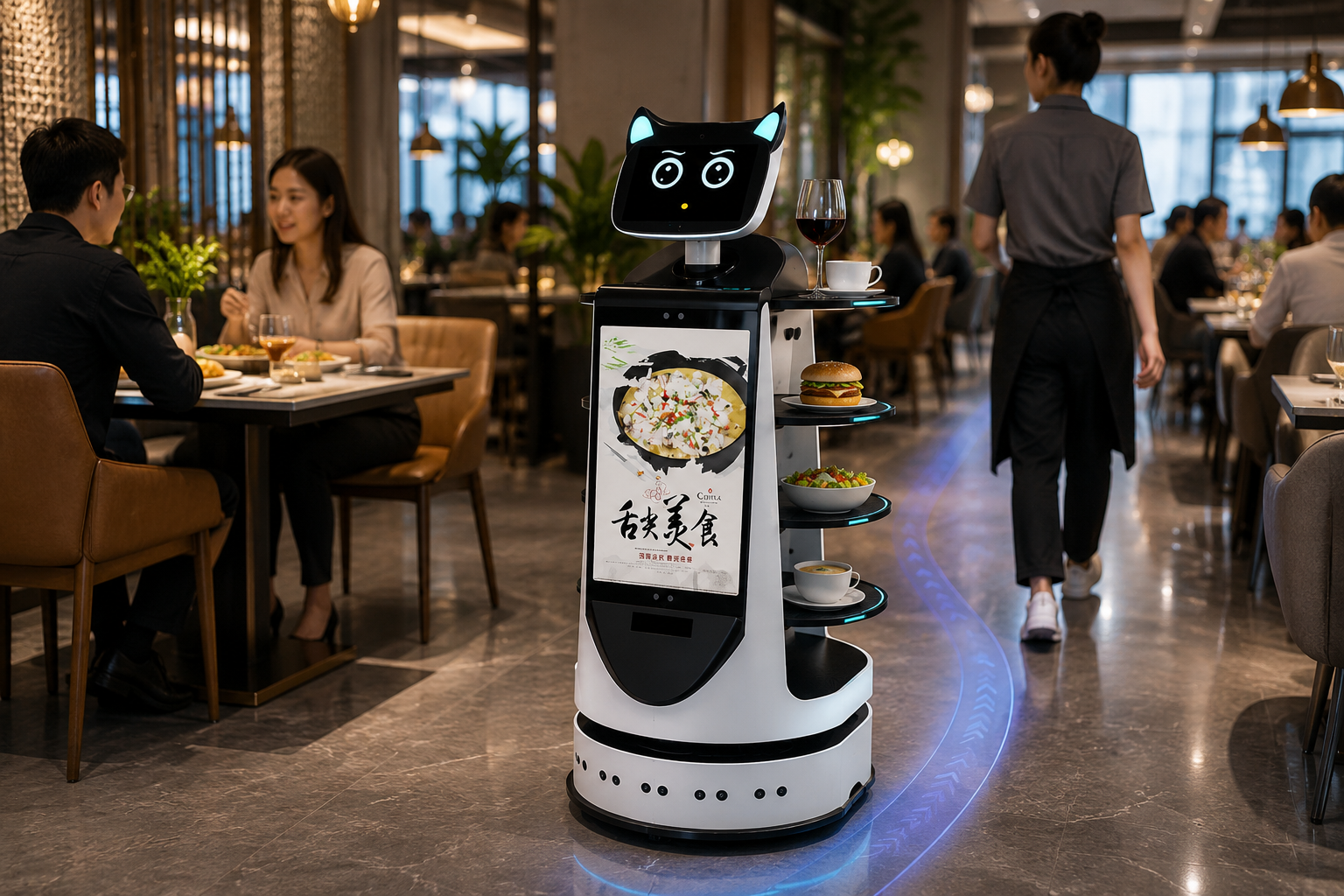
Popbot D2 combines ultrasonic obstacle avoidance with a visual depth camera to detect surrounding objects and respond immediately.
Rather than waiting until it reaches an obstacle, the robot continuously monitors nearby movement and adjusts its path in real time.
This allows the robot to operate safely around customers while maintaining stable delivery performance throughout busy service periods.
A Stable Chassis Supports Reliable Food Transport
Navigation technology is only one part of the equation.
The physical structure of a food delivery robot also affects tray stability during operation.
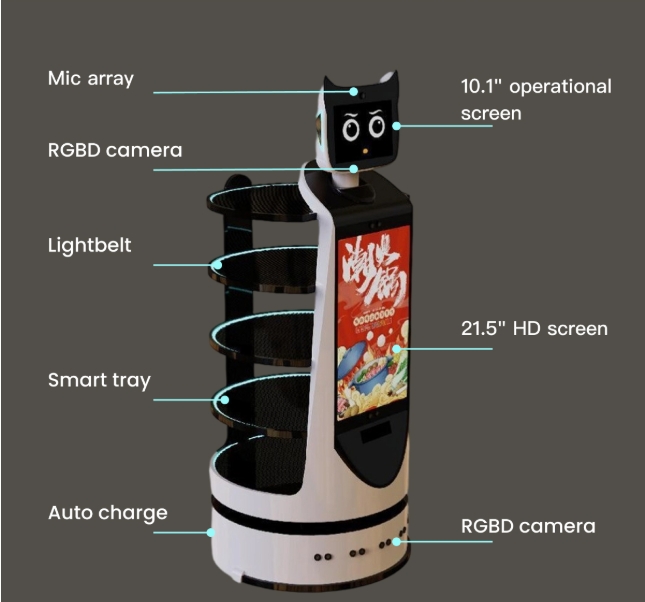
Popbot D2 is designed with a balanced chassis and a low center of gravity to help maintain stability while moving through restaurant environments. Whether the robot is traveling in a straight line, turning around corners, or slowing down near tables, the structure helps minimize unnecessary vibration and movement.
This becomes especially important when transporting beverages, soups, or delicate plated dishes.
Non-Slip Wheels Help Maintain Control
Restaurant floors can vary significantly between locations.
Smooth tiles, polished surfaces, and busy dining areas all require reliable traction.
Popbot D2 uses non-slip rubber wheels designed for stable movement, smooth turning, and controlled stopping. These wheels help the robot maintain consistent movement while reducing sudden shifts that could affect tray stability.
Reliable traction also improves safety by helping the robot maintain predictable movement around customers and staff.
Multi-Tray Design Helps Balance Loads
The way food is carried also affects delivery stability.
Popbot D2 is equipped with five removable trays, with each tray capable of carrying up to 10 kg. This design allows restaurants to transport multiple orders during a single trip while distributing weight across the robot more evenly.
Balanced load distribution helps improve overall stability during movement and reduces unnecessary shifting while traveling through the restaurant.
At the same time, multi-point delivery capabilities allow the robot to serve multiple tables efficiently during busy periods.
Intelligent Speed Control Supports Safer Deliveries
Speed is not always the fastest way to improve service.
In restaurant environments, consistent and predictable movement is often more important than maximum speed.
Popbot D2 operates at adjustable speeds ranging from 0.3 to 1.0 meters per second, allowing restaurants to choose settings that match their operating environment.
When navigating crowded areas, narrow aisles, or table zones, controlled movement helps improve both safety and delivery quality.
The result is a smoother delivery experience for customers and a safer working environment for restaurant staff.
Safety Goes Beyond Obstacle Avoidance
When discussing robot safety, many people focus only on collision prevention.
In reality, safe food delivery involves much more than avoiding obstacles.
A food delivery robot must navigate smoothly, carry food securely, stop predictably, and operate consistently throughout service periods.
Features such as LiDAR navigation, ultrasonic obstacle avoidance, visual depth perception, stable wheel design, and intelligent speed control all work together to support safe and reliable restaurant operations.
The goal is not simply to prevent accidents but to ensure every delivery is completed smoothly from the kitchen to the table.
Conclusion
Stable food transportation is one of the most important responsibilities of a food delivery robot.
Popbot D2 combines intelligent navigation, real-time obstacle avoidance, stable movement systems, and multi-tray delivery capabilities to help restaurants transport food safely and efficiently.
As restaurant automation continues to evolve, stability and safety will remain essential factors in creating reliable delivery experiences for both operators and customers.
FAQ
How do food delivery robots keep food stable while moving?
Food delivery robots use a combination of intelligent navigation, stable chassis design, non-slip wheels, and controlled speed management to minimize vibration and sudden movement during delivery.
Can food delivery robots avoid people and obstacles automatically?
Yes. Popbot D2 uses LiDAR navigation, ultrasonic sensors, and a visual depth camera to detect and avoid obstacles in real time.
Are food delivery robots safe for busy restaurants?
Yes. our food delivery robots are designed to operate in crowded restaurant environments and can navigate safely around customers, furniture, and temporary obstacles.
Can robots transport drinks and delicate dishes safely?
Yes. Stable movement systems, balanced load distribution, and smooth navigation help maintain food presentation and reduce the risk of spills during transport.
Explore Food Delivery Robot Solutions
Looking for a reliable food delivery robot for your restaurant?
Contact our team to learn how Popbot D2 supports safe, stable, and efficient food delivery in real restaurant environments.
Read more: Do Restaurants Need Layout Changes for Delivery Robots