
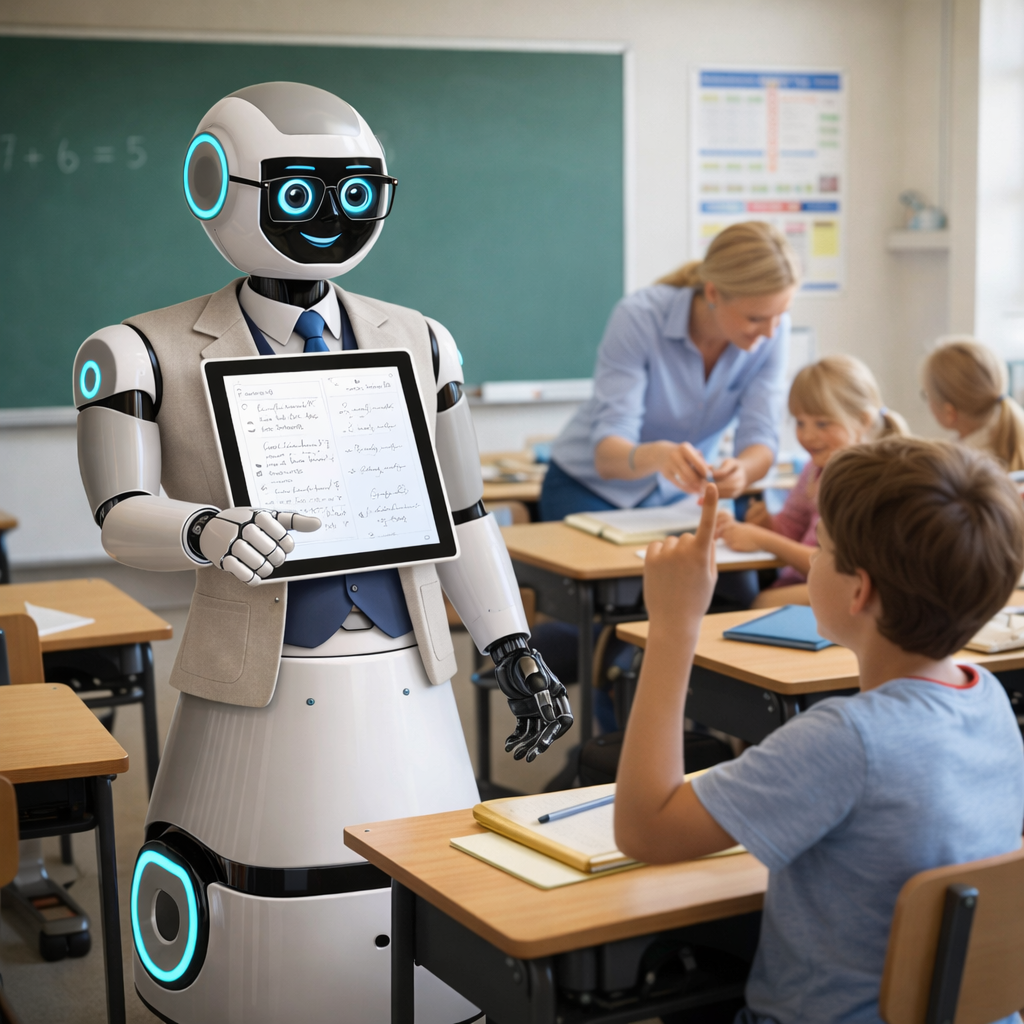
Technology Background: Why Human-Centered Education Needs Robotic Support
In primary schools and kindergartens, the biggest operational challenge is not content quality—but attention distribution.
Teachers are required to deliver standardized instruction while simultaneously addressing individual learning gaps and emotional needs. In reality, a single class period is largely consumed by explanation and demonstration, leaving limited time for personalized interaction.
Reception robots designed for educational environments are emerging as teacher-support systems, not teaching replacements—focused on repetition, guidance, and emotional stabilization.
Core Technology Concept: “Teacher Extension” Rather Than Automation
In education scenarios, reception robots function as interactive extensions of educators, enabled by three key technology layers:
l Content modeling based on teacher input
l Conversational interaction tuned for age-specific behavior
l Scenario-based role control (assistant, guide, companion)
Their value lies in replicating structured guidance, not improvisational teaching.
Scenario 1: Reception Robots in Primary and Middle Schools (K–12)
The Core Challenge
In K–12 classrooms, teachers typically spend most of the class explaining concepts and problem-solving logic. However, students absorb information at different speeds.
Post-class interaction time is limited, making it difficult to ensure that every student has fully understood foundational concepts.
How Reception Robots Support Learning
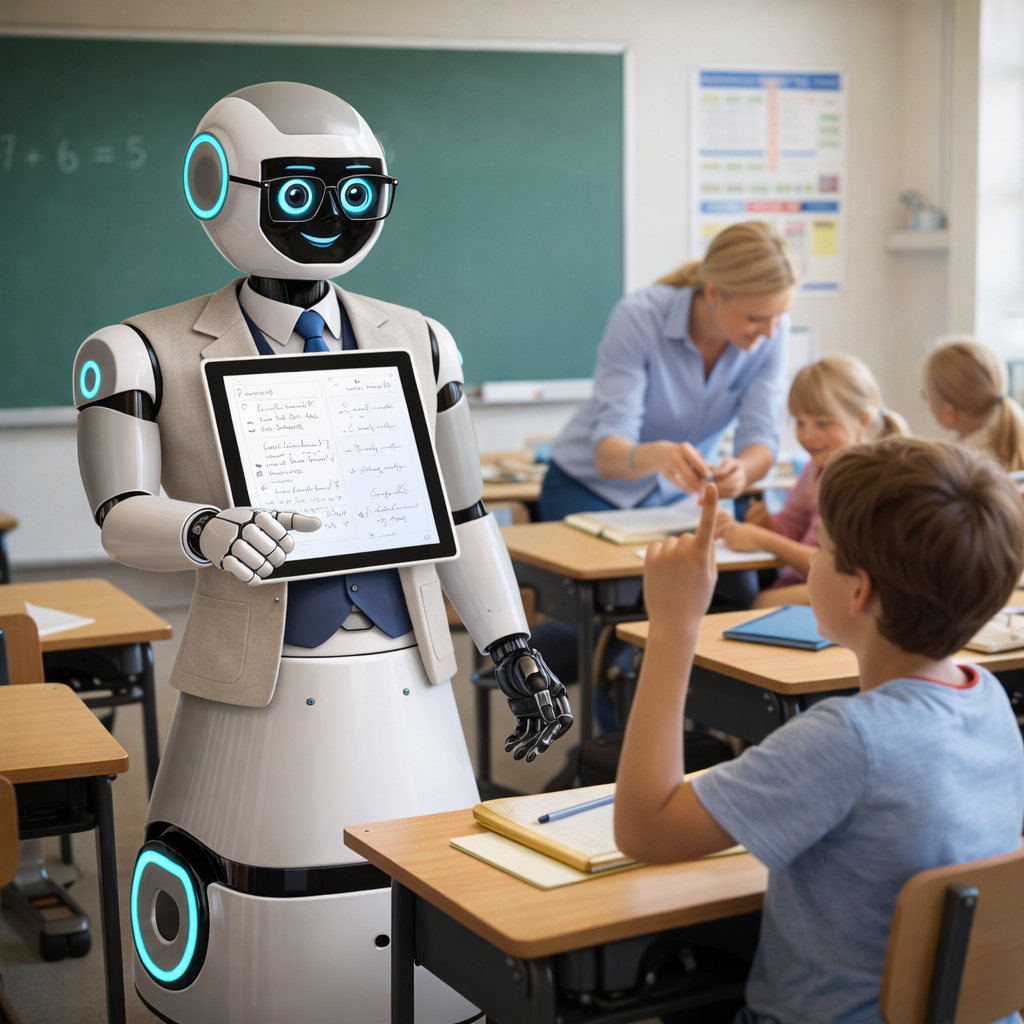
Reception robots can be trained to record and structure a teacher’s teaching logic, including:
lStep-by-step problem-solving methods
lExplanation sequences for key concepts
lCommon student misunderstandings
During after-class practice or self-study periods, the robot acts as a teaching avatar, helping students:
lReview lesson content
lAsk clarification questions
lRevisit problem-solving steps at their own pace
Operational Impact
This approach delivers measurable benefits:
lTeachers reduce repetitive explanation workload
lStudents receive consistent guidance outside class hours
lFoundational questions are resolved before escalating to teachers
lClassroom interaction quality improves over time
Rather than replacing instruction, the robot absorbs repetitive cognitive labor, allowing teachers to focus on higher-value guidance.
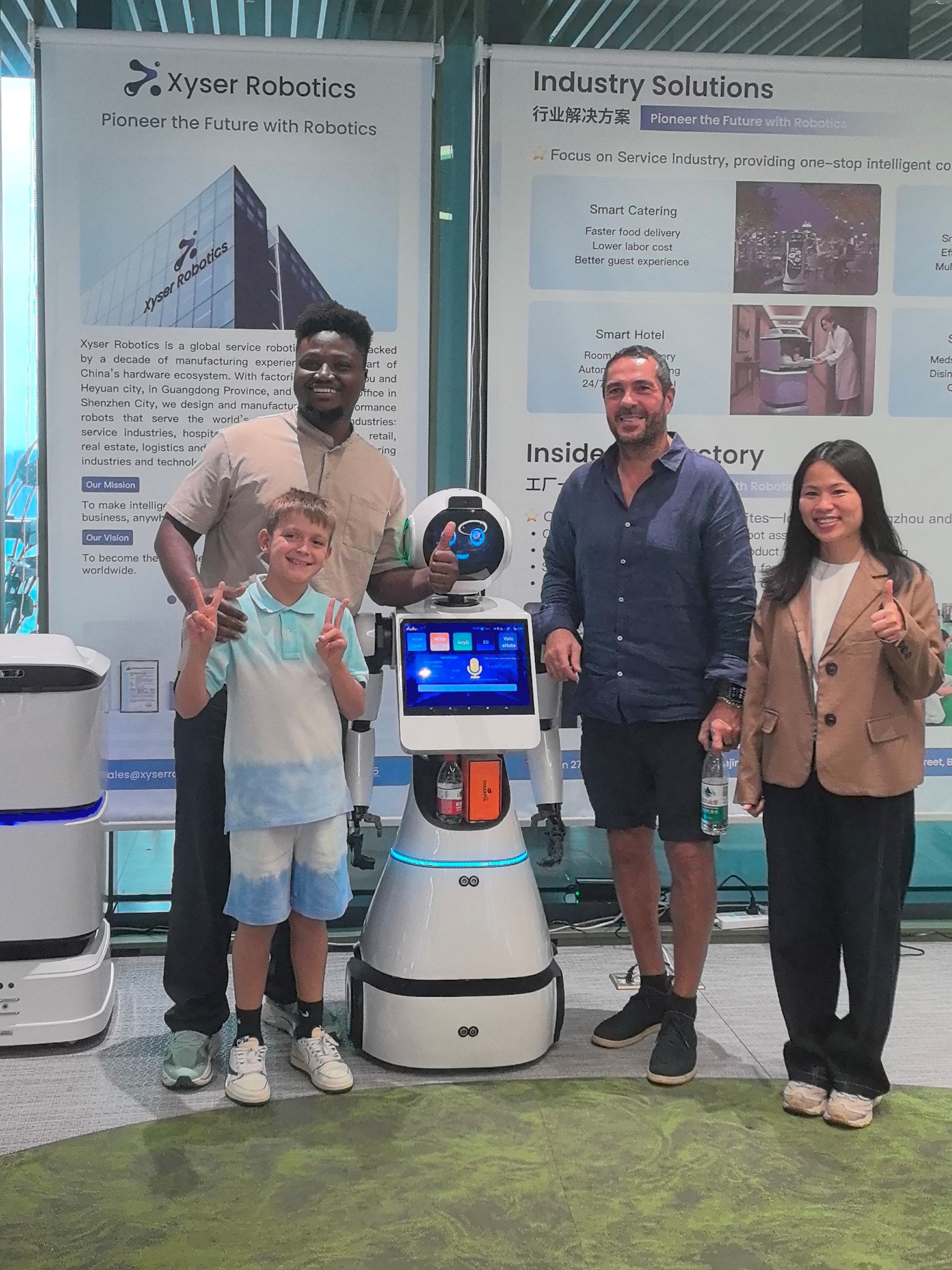
Scenario 2: Reception Robots in Kindergartens and Early Childhood Education
The Core Challenge
In early childhood environments, teachers manage not only learning activities but also emotional regulation and group order.
During games, storytelling, or guided learning sessions, it is difficult for one teacher to simultaneously:
lMaintain engagement
lManage emotional fluctuations
lAddress individual behavioral needs
How Reception Robots Assist in Low-Age Settings
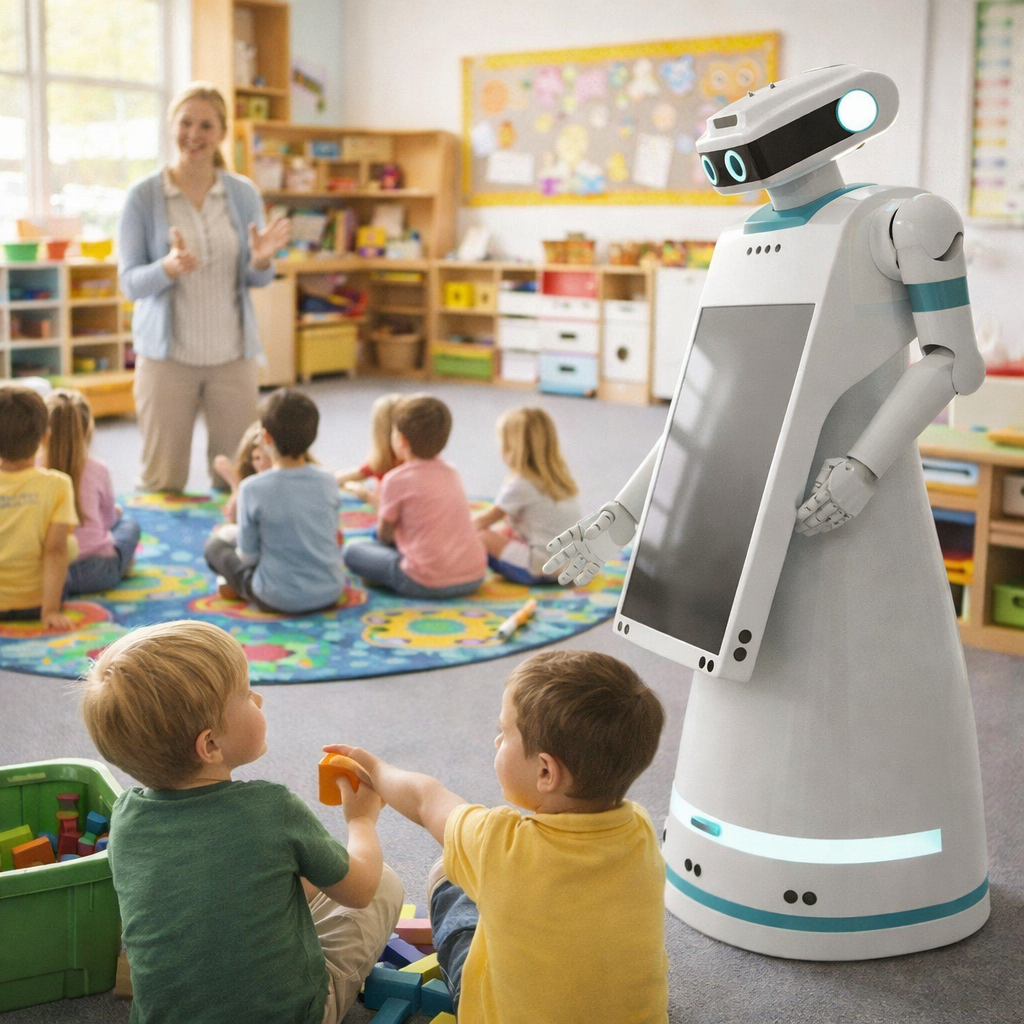
In kindergartens, reception robots act as assistant counselors or engagement guides, supporting teachers by:
lLeading simple interactive activities
lRedirecting distracted children
lProviding emotional cues through voice and expression
lReinforcing rules and routines
When teachers are occupied with the main group, robots help manage smaller subsets of children, reducing stress and improving classroom flow.
Safety and Design Considerations
In low-age scenarios, reception robots are designed with:
lLimited autonomy boundaries
lPre-defined interaction scripts
lEmotion-sensitive but non-authoritative behavior
This ensures robots remain supportive companions, not disciplinarians.
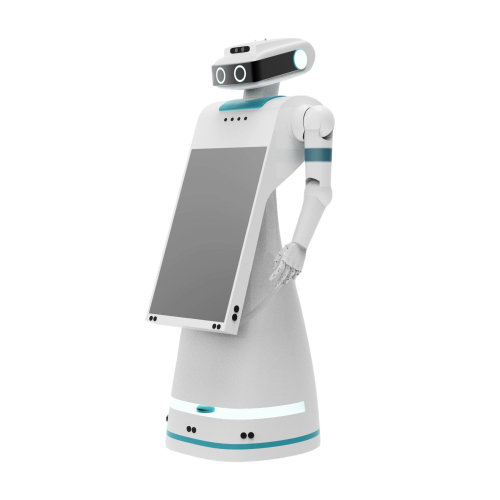
Key Benefits for Educational Institutions
Across both age groups, reception robots provide institutions with:
lImproved teacher efficiency
lMore consistent student engagement
lBetter utilization of after-class learning time
lEnhanced classroom order and emotional stability
For school administrators, the value lies in scalability without increasing staff load.
Deployment Considerations
Before adoption, institutions should evaluate:
lContent ownership and teacher control over training data
lAge-appropriate interaction design
lIntegration with existing teaching workflows
lClear role definition to avoid teacher displacement concerns
Successful deployments frame robots as educational infrastructure, not novelty devices.
Conclusion: Robots as Educational Force Multipliers
Reception robots in education are not about replacing teachers.
They are about multiplying a teacher’s presence, ensuring that learning support and emotional guidance extend beyond the limits of time and attention.
For schools facing growing class sizes and limited teaching resources, reception robots represent a practical, human-centered application of automation.
Ready to enhance teaching efficiency without adding workload?
Explore Popbot-X1 & Popbot-W1 or Contact our experts to see how AI-powered classroom assistance supports teachers and students at scale.


