As China becomes the world’s largest producer of commercial service robots—from delivery robots to cleaning robots and café automation—one question is becoming increasingly urgent:
Why do robots that run flawlessly in China suddenly struggle once they are deployed overseas?
Even the most advanced Chinese-built robots face unexpected “cultural shock” when entering international markets. Despite strong hardware capabilities and competitive pricing, many deployments run into performance issues not caused by the robot itself, but by the complex ecosystem it depends on.
Below are the two biggest, yet most underestimated, sources of friction.
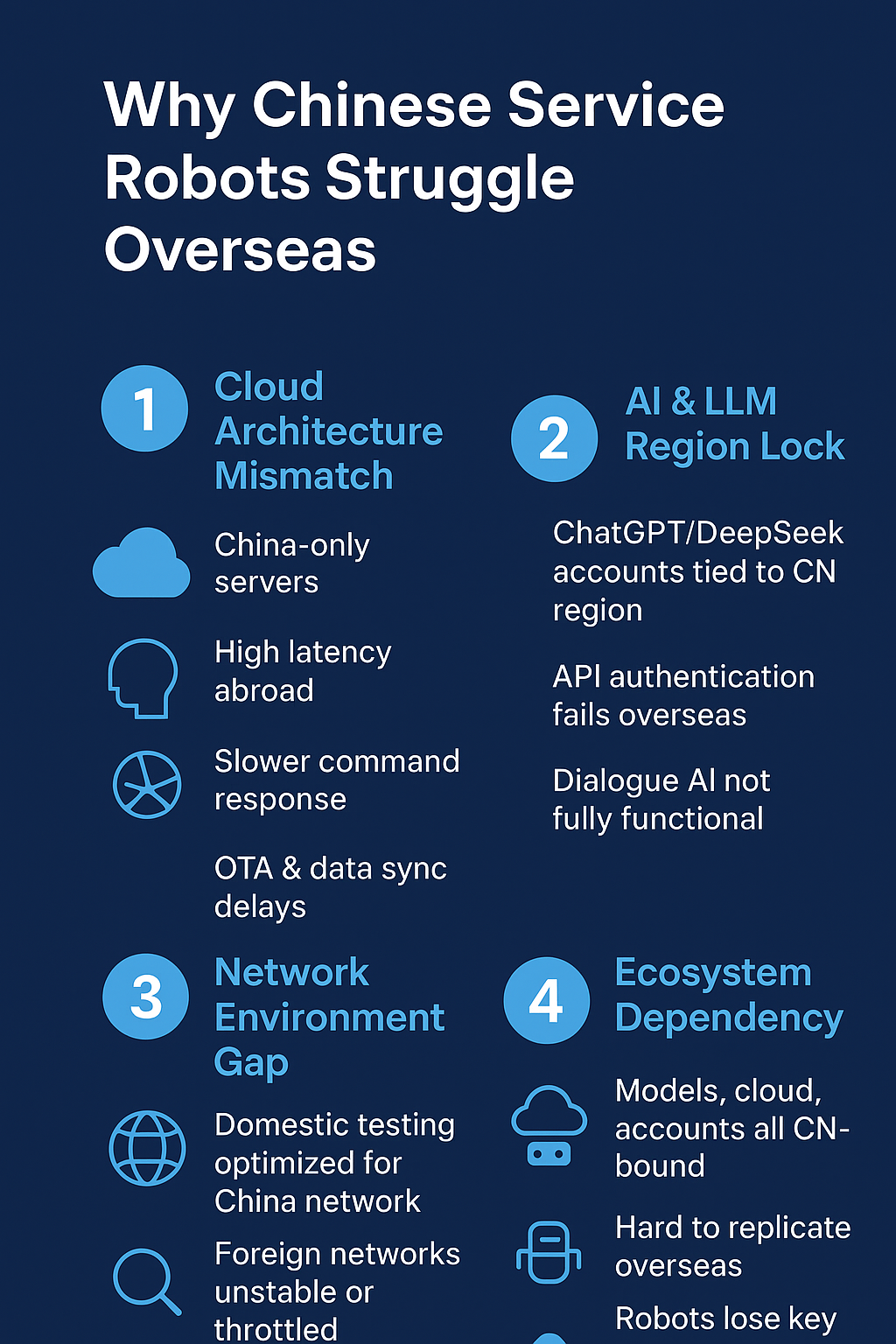
1. Localization Gap: Robots Optimized for China’s Network Environment Break Down Overseas
Most Chinese robot companies deploy and optimize their systems under China’s extremely fast, stable, and centralized network environment. Robots are tested on:
-
Domestic cloud servers
-
High-speed local networks
-
China-based mapping, streaming, and data services
But once these robots are shipped to Europe, Saudi Arabia or North America, the same stack often breaks down.
Common symptoms include:
-
Slow map loading
-
Delayed navigation responses
-
Inconsistent cloud interactions
-
Data syncing failures
-
Poor OTA update performance
The root cause?
➡ They rely on servers located only within China.
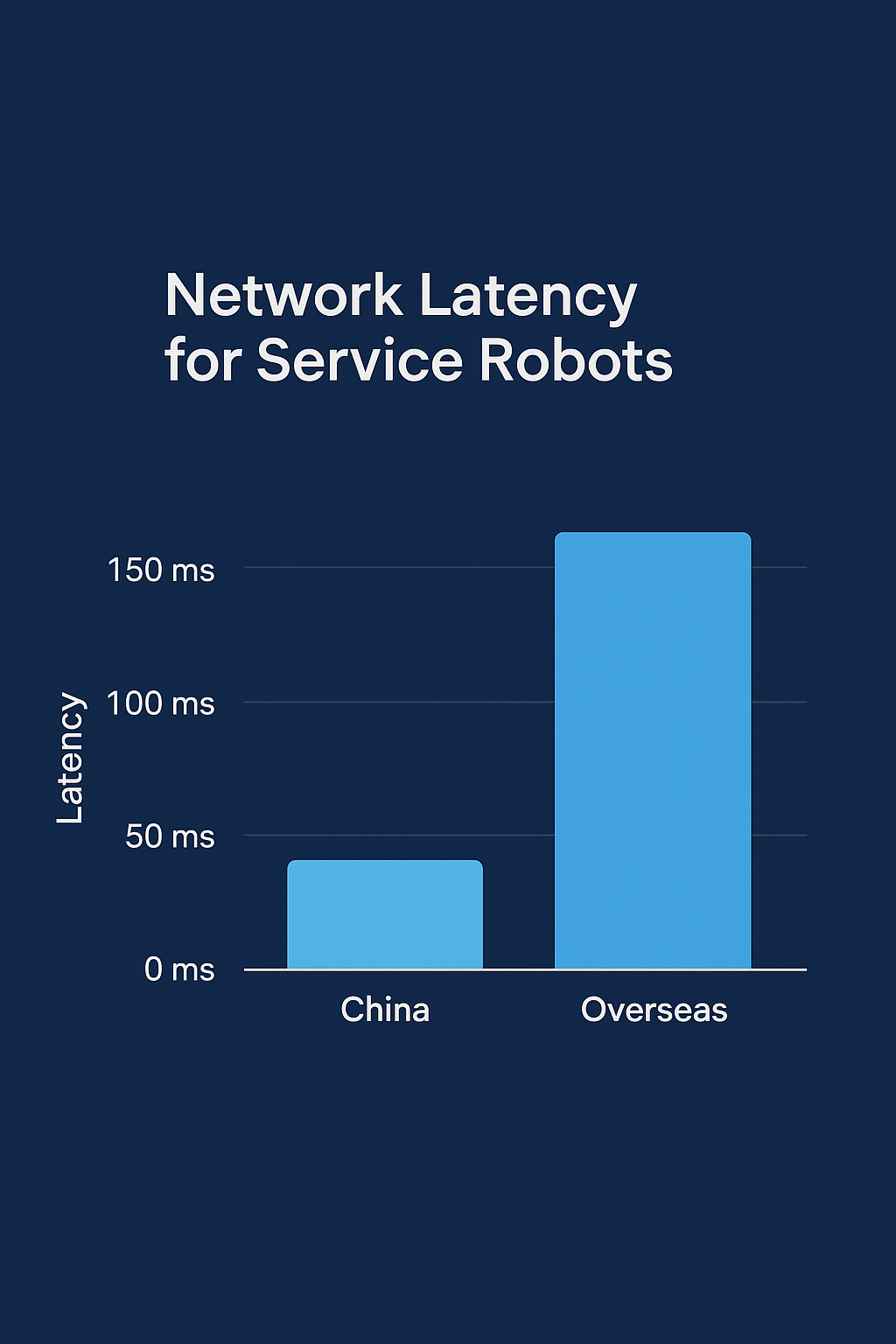
When a robot’s cloud brain is 8,000 km away, latency becomes unavoidable.
A command that takes 20 ms in Shenzhen may take 500–1000 ms in the Middle East or Europe.
Most global markets expect near-instant response times.
A navigation robot that hesitates for one second per decision becomes unusable in commercial environments.
This is why leading multinational robotics brands build regional server clusters, but many early-stage Chinese companies do not—yet.
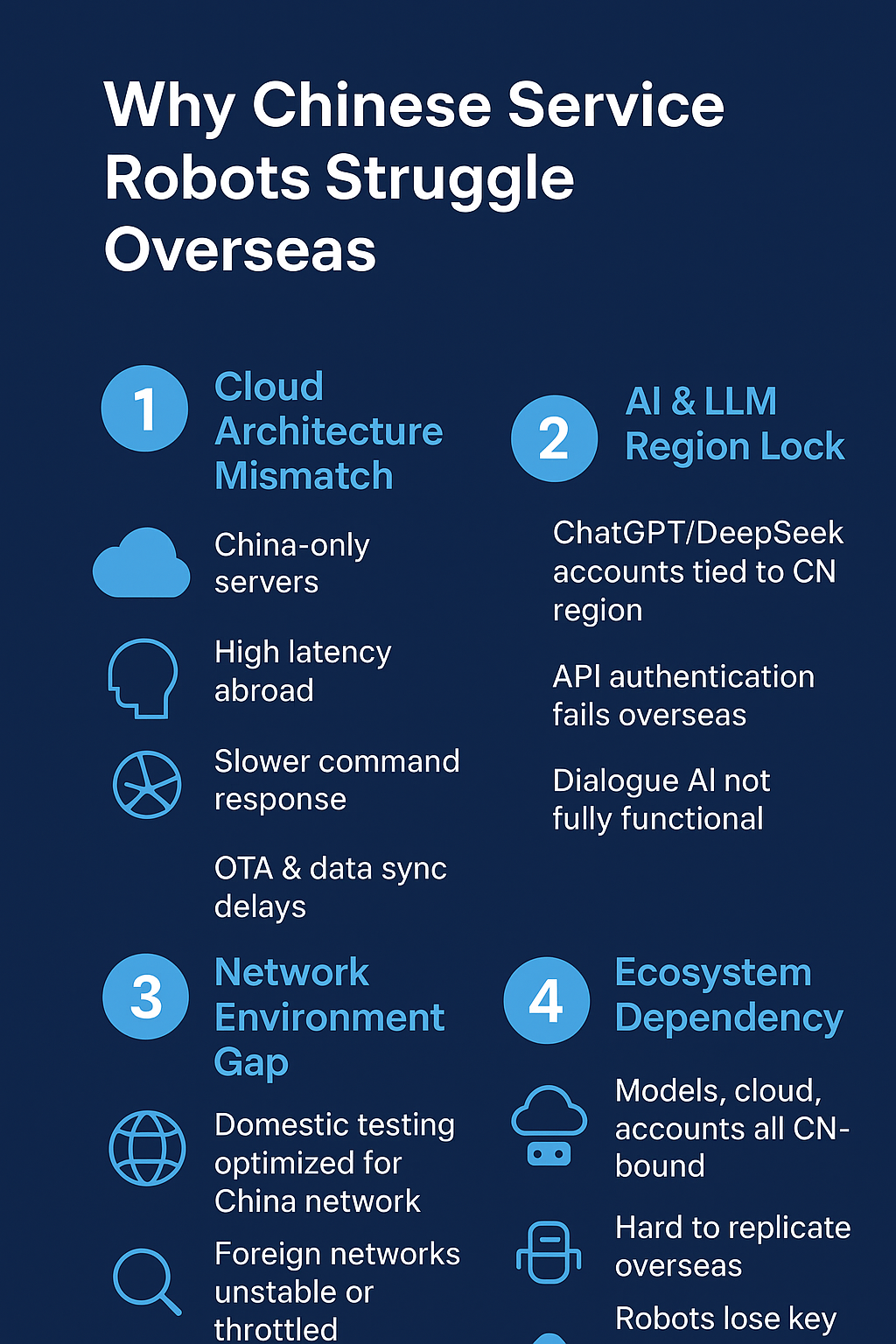
2. AI Shock: ChatGPT, DeepSeek & Other LLM Features Break Without Local Accounts
The second challenge is even more surprising.
Many next-generation Chinese service robots are marketed as “AI robots” with integrated:
-
ChatGPT
-
DeepSeek
-
Qwen
-
Other Chinese LLMs
In China’s network environment, these models work perfectly because:
-
API keys are registered using domestic accounts
-
Access conditions match Chinese network rules
-
No overseas API request restrictions
But once the same robot is deployed overseas, two major issues emerge:
Problem A: LLMs require a new account in the target country
For example:
-
ChatGPT API accounts registered in China cannot authenticate normally in the Middle East
-
DeepSeek accounts bound to China region cannot issue tokens for overseas servers
Result:
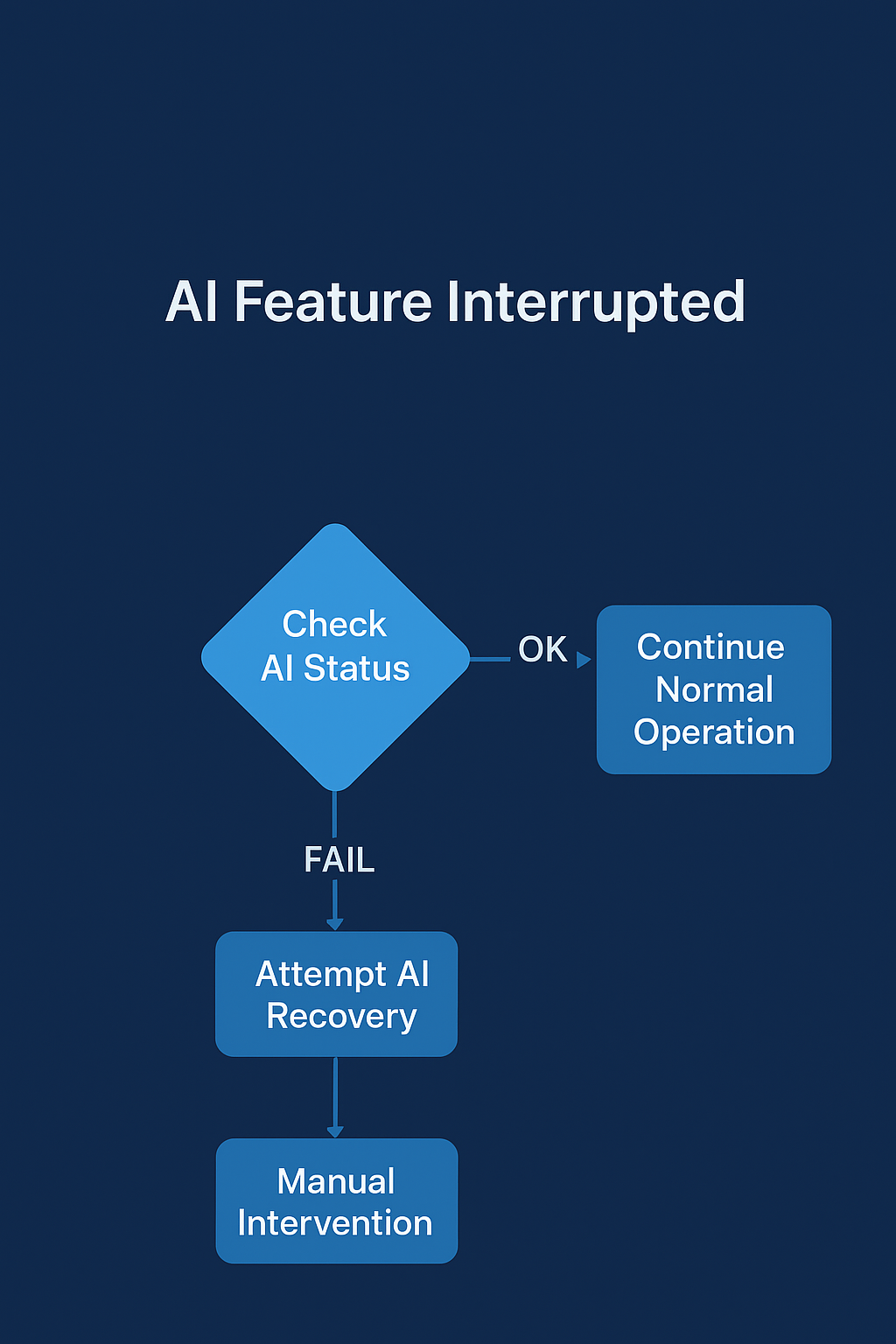
The robot’s “intelligent conversation capability” disappears instantly.
Problem B: Overseas networks block or slow access to Chinese LLM endpoints
Foreign networks ≠ Chinese networks.
APIs may time out or fail to complete.
The customer’s perception?
“The robot’s AI doesn’t work.”
But the real reason is network region mismatch, not the robot itself.
Why These Two Issues Matter More Than Hardware
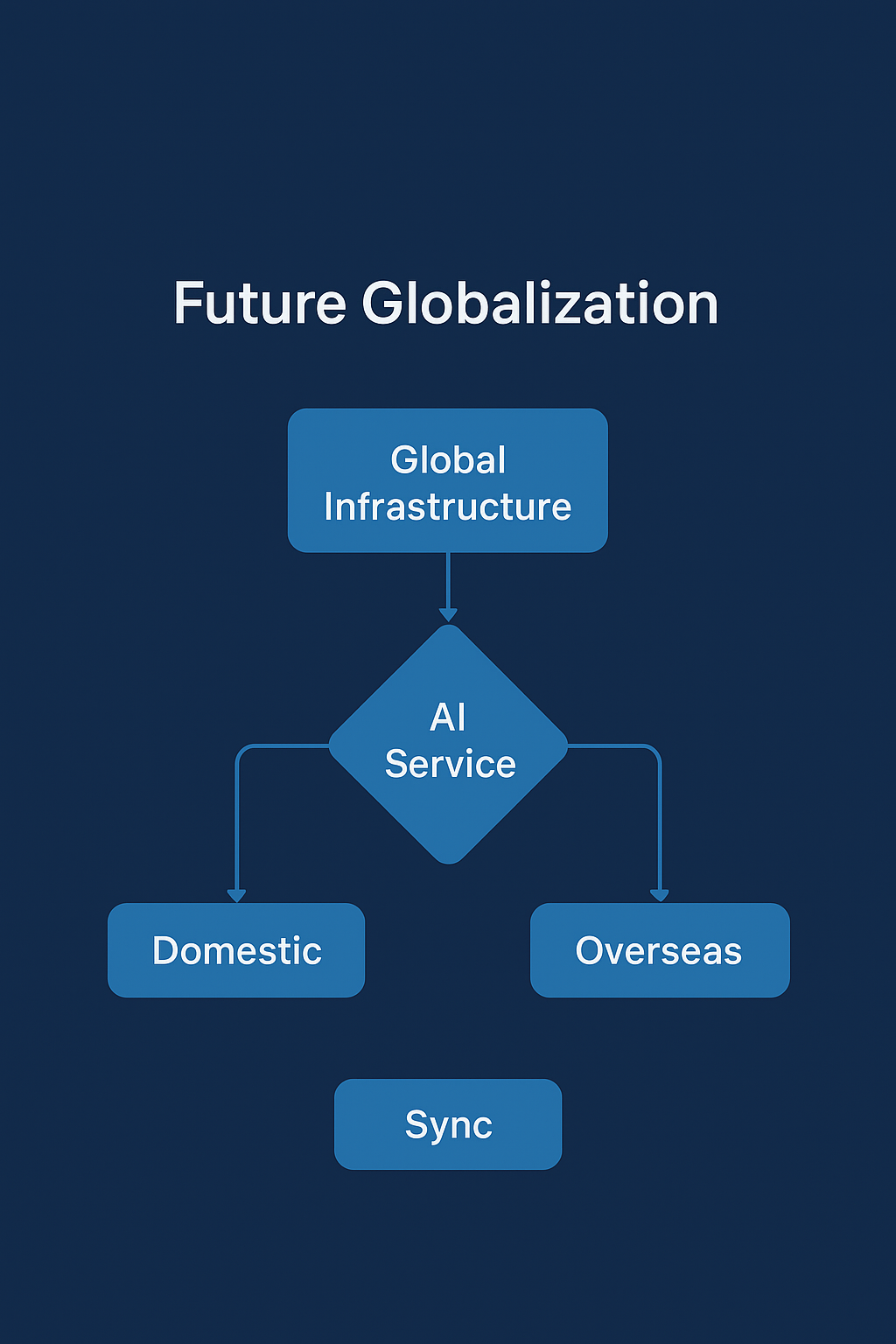
Robots leaving China today are not simply machines—they are cloud-dependent systems.
If the robot’s “brain” cannot connect stably, even the best sensors and motors become useless.
This is why Chinese robot companies must rethink global expansion. The winning brands in the next decade will not be the cheapest—they will be the ones who solve:
-
Global server deployment
-
Cross-region API access
-
Localized AI compliance
-
Cloud-edge collaboration optimized per market
In other words:
Exporting a robot is no longer exporting hardware.
It is exporting an entire cloud ecosystem.
What Comes Next: The New Standard for Export-Ready Chinese Robots
To succeed globally, Chinese robot companies must evolve beyond “domestic-first architecture.”
Winning the global market will require:
1. Regional edge servers (EU, Middle East, North America, LATAM)
Low-latency, compliant, resilient.
2. Multi-LLM switching
If one model fails, robot auto-switches API providers.
3. Region-based LLM authentication
Allow robots to request new region-bound keys securely.
4. Cloud-free fallback mode
Robots must operate fully offline if the cloud is unstable.
Brands that solve these issues will dominate export markets—not because of cheaper pricing, but because they deliver real operational reliability.
Conclusion
China’s service robot industry has world-leading hardware and rapidly advancing AI capabilities.
But the next stage of globalization requires solving the invisible infrastructure challenges behind the scenes.
Robots don’t fail overseas because they are weak.
They fail because their ecosystem was never designed to travel.
And the companies that fix this will define the next generation of global robotics.
Contact Xyserrobotics to deploy your robot!
Read more: Before Buying a Robotic AI Coffee Machine, Do the Math First