Introduction
The role of the reception desk is changing rapidly.
Across hotels, corporate offices, hospitals, airports, and public venues, visitors increasingly expect immediate answers, multilingual communication, and seamless service experiences. At the same time, organizations face mounting pressure from labor shortages, rising operational costs, and growing customer expectations.
This is where AI-powered reception robots are beginning to make a meaningful impact.
Powered by advanced large language models such as OpenAI's ChatGPT and Anthropic's Claude AI, modern reception robots can do far more than greet visitors. They can understand natural conversations, access enterprise knowledge bases, provide contextual responses, and assist guests in real time.
As AI continues to evolve, reception robots are becoming intelligent service assistants capable of enhancing both customer experience and operational efficiency.
What Makes Modern Reception Robots Different?
The first generation of reception robots relied heavily on predefined scripts and limited interaction capabilities. Their responses were often rigid, making conversations feel unnatural and frustrating.
Today's AI-powered reception robots represent a significant leap forward.
By integrating large language models, they can understand intent rather than simply matching keywords. Visitors can ask questions naturally, change topics mid-conversation, and receive responses that feel more human and relevant.
Instead of functioning as information kiosks, these robots are increasingly acting as digital employees capable of supporting a wide range of customer-facing tasks.
Use Case 1: Creating a Better First Impression for Visitors
The first few moments after a visitor enters a building often shape their perception of the entire organization.
In busy environments, reception staff may be occupied with phone calls, visitor registration, or administrative work, leaving guests waiting for assistance. During peak hours, these delays can create frustration and negatively impact the visitor experience.
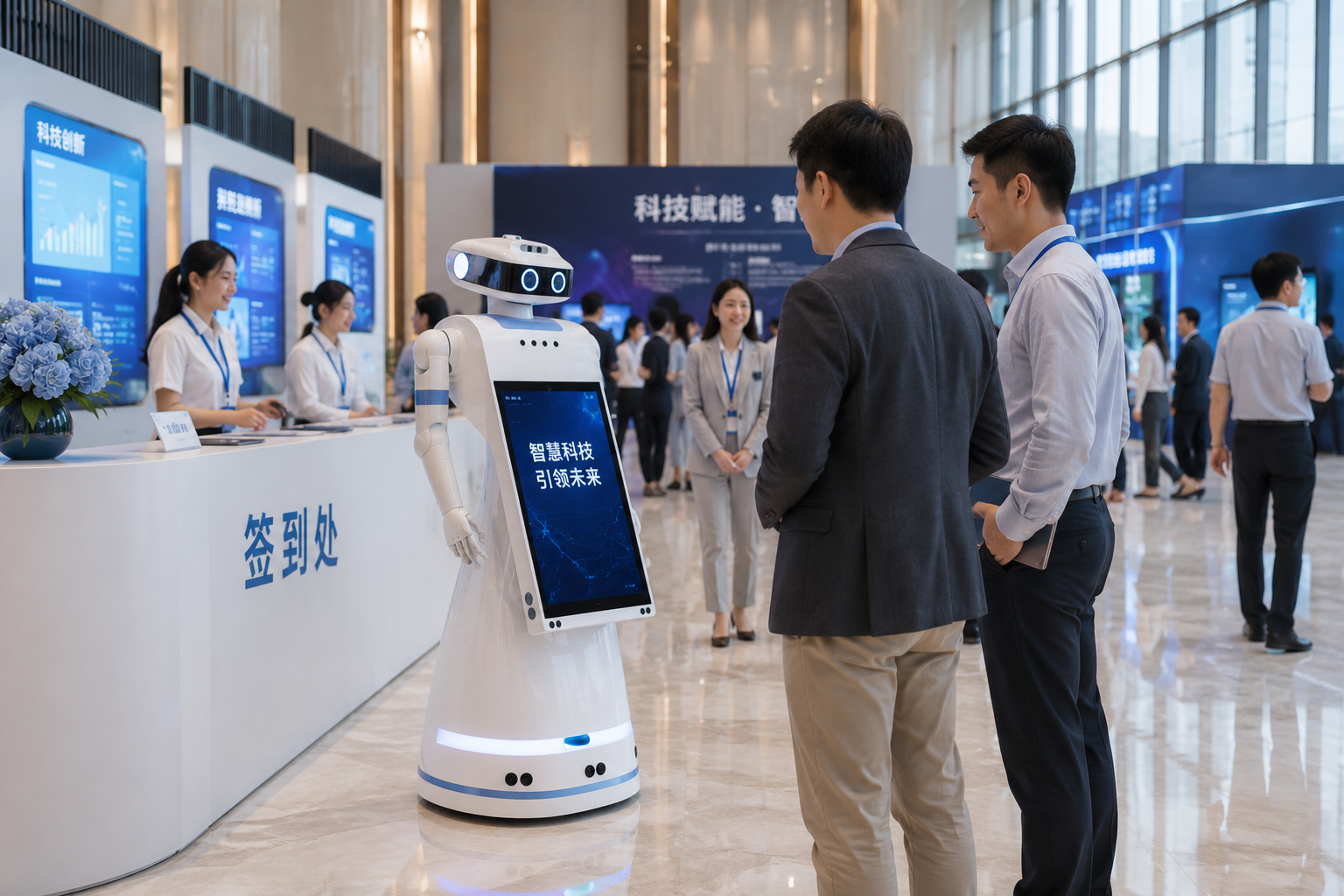
An AI-powered reception robot provides immediate engagement the moment a visitor arrives. It can welcome guests, answer common questions, and help them understand where they need to go without requiring staff intervention.
For hotels, office buildings, and exhibition centers, this creates a more professional and responsive arrival experience while allowing employees to focus on more complex customer interactions.
Use Case 2: Eliminating Language Barriers
Globalization has made multilingual customer service a necessity rather than a luxury.
Hotels host international travelers, universities welcome overseas students, and corporate offices regularly receive foreign visitors. Providing support in multiple languages can be challenging, particularly for organizations operating with limited staff.
By leveraging large language models, reception robots can communicate naturally across multiple languages and switch between them almost instantly.
A visitor can speak in Spanish, receive answers in Spanish, and continue the conversation without needing a translator. The experience feels seamless and significantly improves accessibility for international guests.
For businesses serving diverse customer groups, multilingual AI can help deliver consistent service quality regardless of language differences.
Use Case 3: Real-Time Translation During Customer Interactions
Beyond multilingual conversations, AI-powered reception robots can facilitate communication between people who do not share a common language.
Imagine a hotel guest seeking assistance from a front desk employee who speaks a different language. Traditionally, this interaction may require translation apps or bilingual staff members.
A reception robot can act as an intermediary, translating conversations in real time and allowing both parties to communicate naturally.
This capability is particularly valuable in hospitality, healthcare, tourism, and international exhibitions, where clear communication directly affects customer satisfaction and service quality.
By reducing misunderstandings and improving communication efficiency, businesses can create a more welcoming experience for international visitors.
Use Case 4: Delivering Instant Answers to FAQ
Reception teams spend a significant portion of their day answering repetitive questions.
Visitors frequently ask about office locations, meeting schedules, operating hours, available services, parking information, and facility amenities.
While each question is simple, collectively they consume valuable staff time.
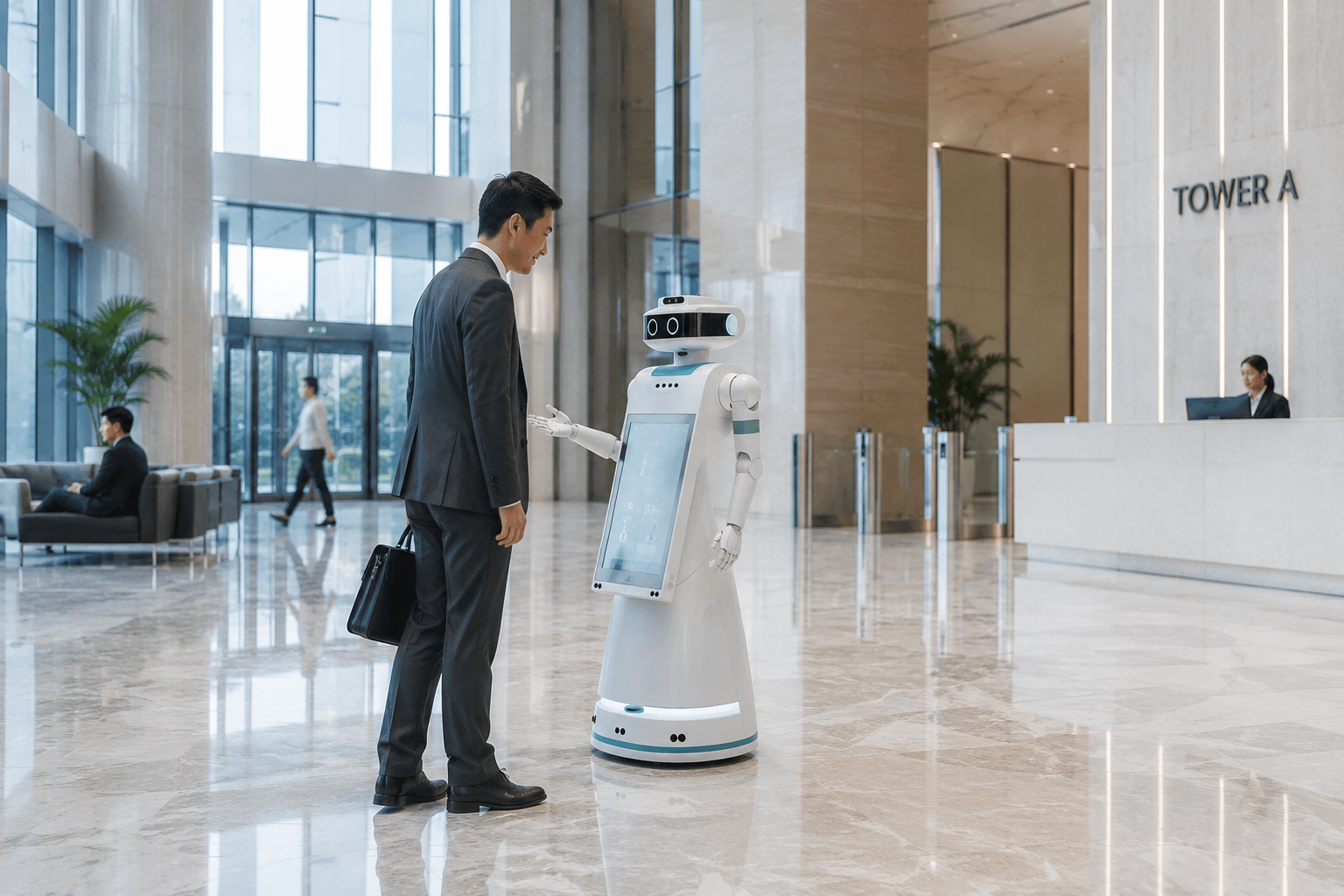
By connecting ChatGPT or Claude AI to company documents, FAQs, and internal knowledge bases, reception robots can provide immediate and accurate responses without human involvement.
More importantly, visitors are not limited to selecting options from a predefined menu. They can ask questions conversationally and receive contextual answers that feel natural and helpful.
This improves efficiency while ensuring information remains consistent across every interaction.
Use Case 5: Providing Hands-Free Assistance Through Natural Voice Interaction
Touchscreens and mobile applications have become common, but many users still prefer speaking when seeking assistance.
Whether carrying luggage in a hotel, navigating a hospital, or arriving at a conference venue, visitors often need information quickly and conveniently.
Modern reception robots allow users to interact through natural speech, creating a more intuitive experience. Instead of searching through menus, visitors can simply ask for directions, request information, or seek recommendations.
The robot understands the request, interprets intent, and provides a relevant response.
This conversational approach reduces friction and makes technology more accessible for people of all ages and technical backgrounds.
Use Case 6: TurningProduct Knowledge Into a Scalable Business Asset
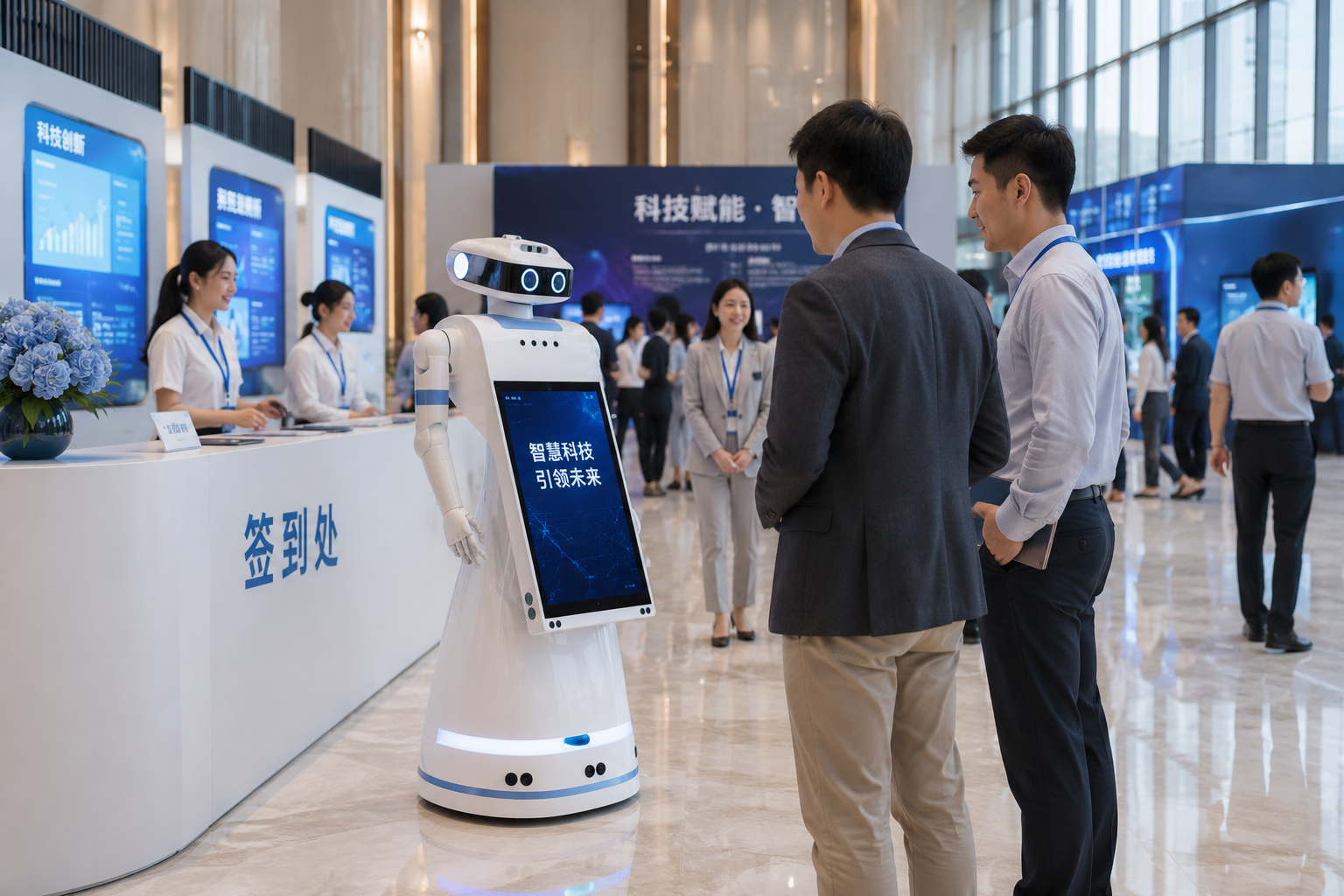
Trade shows, showrooms, and visitor centers face a common challenge: delivering consistent product information while managing staffing costs.
Traditionally, businesses rely on sales representatives or reception staff to introduce products and answer visitor questions. However, training new employees requires significant time and resources. Even after onboarding, product knowledge often varies from person to person, leading to inconsistent customer experiences.
AI-powered reception robots offer a fundamentally different approach.
By connecting the robot to a company's knowledge base—including product catalogs, technical specifications, training materials, FAQs, and marketing content—the robot can immediately access and utilize the organization's accumulated expertise.
Rather than spending weeks training a new employee, businesses can upload their knowledge once and deploy it instantly across multiple robots and locations.
This highlights one of AI's greatest strengths: knowledge storage and replication.
Unlike human employees, who may forget information or require continuous training, AI-powered reception robots can consistently deliver the same level of product knowledge to every visitor. When product information changes, updates can be made centrally and distributed across the entire robot fleet within minutes.
At trade shows and exhibitions, this means visitors can receive detailed product explanations even when sales representatives are busy with other conversations. In corporate showrooms, the robot effectively becomes a highly trained product specialist available at all times.
For businesses facing high employee turnover or rapid expansion, the ability to transform institutional knowledge into a scalable digital asset may be one of the most valuable advantages of AI-powered reception robots.
Use Case 7: Connecting Visitors With Remote Experts
Not every inquiry can be handled through automation alone.
In some situations, visitors require assistance from a specialist, manager, or customer service representative. Traditionally, this often involves waiting for someone to become available or locating the appropriate department.
Reception robots can streamline this process by acting as a gateway to remote support.
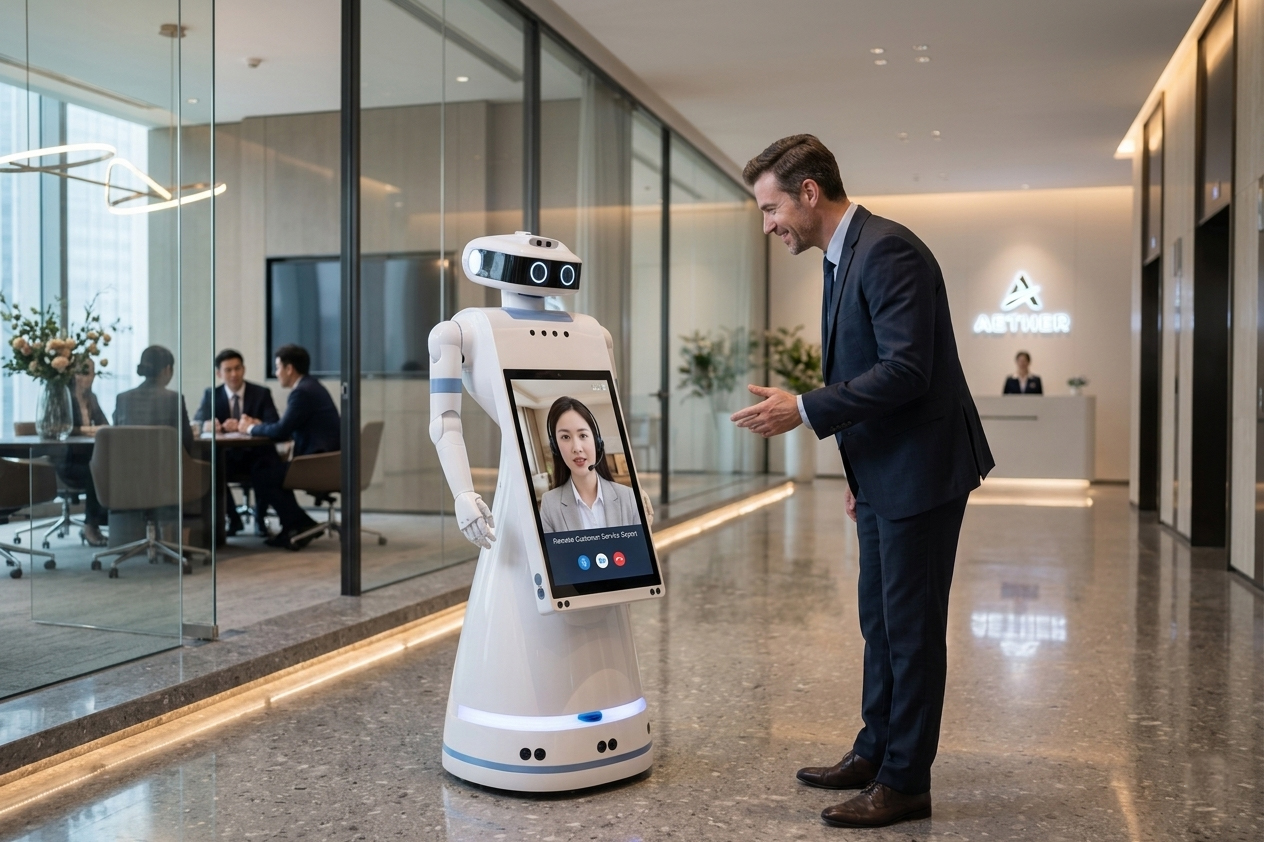
When a request exceeds the robot's capabilities, it can initiate a live video call with a human expert, allowing visitors to receive immediate assistance without leaving the reception area.
This hybrid service model combines the scalability of AI with the expertise of human employees, helping organizations deliver faster and more effective support.
Use Case 8: Becoming a Digital Concierge
Visitors often need information that extends beyond the building they are visiting.
A hotel guest may be looking for nearby restaurants. A business traveler may need flight information. A conference attendee may want transportation recommendations or local attractions.
Traditionally, these requests rely on front desk personnel with varying levels of local knowledge.
An AI-powered reception robot can access real-time information and provide personalized recommendations through natural conversation.
Rather than directing visitors to search online themselves, the robot delivers immediate answers and relevant suggestions.
This transforms the reception robot from a simple greeter into a digital concierge capable of supporting visitors throughout their entire journey.
The Future of AI-Powered Customer Service
The integration of ChatGPT, Claude AI, and robotics is redefining what front-desk service can look like.
Reception robots are no longer limited to scripted greetings or basic information retrieval. They are becoming intelligent assistants capable of understanding visitors, solving problems, and creating more personalized experiences.
As large language models continue to improve, businesses will increasingly view reception robots not as novelty devices, but as practical tools for enhancing customer service and operational efficiency.
The organizations that adopt these technologies today may be better positioned to meet the expectations of tomorrow's customers.
Contact xyserrobotics experts for an AI powered robot deployment solution tailored to your assets.
Read more:
How Food Delivery Robots Ensure Tray Stability and Safety
How Food Delivery Robots Handle Restaurant Peak Hours (2026 Guide)